

Grant & Eisenhofer and Poolson|Oden File Claims on Behalf of Hundreds of Railroad Workers Sickened by Decades of Toxic Exposure
Claims detail Norfolk Southern's documented knowledge of hazardous conditions dating back decades
PHILADELPHIA, July 20, 2026 (GLOBE NEWSWIRE) -- Charlie Hunter, 73, gave four decades of his life to the Norfolk Southern Railway, working his way up from track laborer to foreman. He loved working for the railroad. What he didn't know — until a recent lung cancer diagnosis — was that the chemicals and conditions he worked around every day for 40 years were life-threatening, according to his legal team from Grant & Eisenhofer and Poolson|Oden.
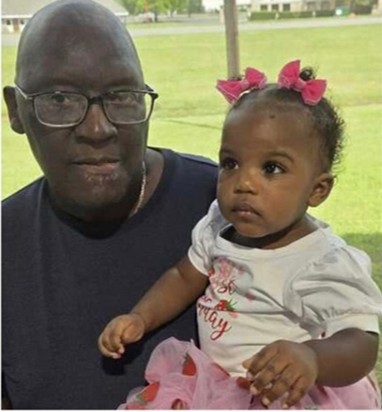
Charlie Hunter with his granddaughter: Family Photo
Mr. Hunter's claim (Hunter v. Norfolk Southern Railway Co., Philadelphia Court of Common Pleas, No. 260701694) was recently filed in the Philadelphia Court of Common Pleas; it is the first in a wave of new cases being brought under the Federal Employers’ Liability Act (FELA) of 1908 on behalf of railroad workers across the country who developed cancer and other serious illnesses after years of occupational exposure to diesel exhaust, benzene, creosote, silica dust, asbestos, herbicides and pesticides, and airborne heavy metals — hazards encountered across the railroad, from the shops and yards to the locomotives and the right-of-way, in the ordinary course of keeping Norfolk Southern's trains running.
"These workers built their careers — and in many cases, their families' futures — working on the railroad," said attorneys Adam Gomez and M. Elizabeth Graham of Grant & Eisenhofer, and Carisa German-Oden and Daniel J. Poolson, Jr. of Poolson|Oden. "They went to work every day believing they were safe. Decades later, we are filing these cases because Norfolk Southern owed these workers a basic duty to protect them and abjectly failed in that duty again and again. These filings are aimed at holding the company accountable, and seek the compensation to which these workers and their families are entitled under FELA."
Mr. Hunter's story is far from unique. Among the workers, estimated in the hundreds, represented jointly by the firms in these filings, are conductors, engineers, carmen, machinists, welders, track laborers, all crafts, men and women who spent 20, 30, or in Mr. Hunter’s case, 40 years keeping America's freight trains running. Many learned only recently, often after a life-changing diagnosis, that the conditions they worked in for decades were the likely cause. Several are still undergoing treatment, and, tragically, others passed.
The complaint alleges that Norfolk Southern knew or should have known of the cancer risks posed by these exposures for decades — citing industry proceedings dating to the 1950s and 1960s and epidemiological research on occupational exposure stretching back over a century — yet failed to warn workers, monitor exposure levels, or provide basic protective equipment such as respirators. The complaint further alleges that Norfolk Southern violated the Federal Locomotive Inspection Act (LIA) by failing to maintain adequate ventilation and exhaust filtration in its locomotives, allowing diesel fumes and exhaust to accumulate in train compartments at hazardous levels.
Mr. Hunter, who lives in Birmingham, Alabama, following the filing, said: "I was shocked when the doctors told me I had cancer. I instantly thought of my loving family, my children, and my precious granddaughter (pictured in photo with Mr. Hunter) and grandson that mean the world to me. You go in every day thinking you're safe, doing a job you're good at and proud of, and then you find out you got sick because the company never told you the truth about what you were breathing. It's too late for me and a lot of my brothers and sisters on the railroad, but it doesn't have to be too late for the next generation of rail workers. Worker safety should never be compromised; I know that first hand."
The attorneys noted that worker safety has too often taken a back seat in the railroad industry — a pattern tragically illustrated by Norfolk Southern's 2023 toxic train derailment in East Palestine, Ohio, where subsequent investigation revealed that safety shortcuts contributed to a public health and environmental disaster. These filings, the attorneys said, reflect a continuation of that same pattern: a railroad prioritizing operations and cost over the people who keep it running.
Additional filings on behalf of railroad workers are expected in the coming weeks.
Contacts
Adam Gomez / agomez@gelaw.com
M. Elizabeth Graham / egraham@gelaw.com
Carisa German-Oden / Carisa@poolsonoden.com / 504-766-2200
Daniel Poolson, Jr. / danny@poolsonoden.com / 504-766-2200
Steph Rosenfeld / steph@idadvisors.com / 215-514-4101
A pdf accompanying this announcement is available at http://ml.globenewswire.com/Resource/Download/7c1c63be-f3d3-46ad-9025-3100b7864620
A photo accompanying this announcement is available at https://www.globenewswire.com/NewsRoom/AttachmentNg/a1e69f32-f35f-435e-8be7-5a1e5d61aff0


Retired Norfolk Southern Employee Charlie Hunter with his granddaughter

Charlie Hunter with his granddaughter: Family Photo
Legal Disclaimer:
EIN Presswire provides this news content "as is" without warranty of any kind. We do not accept any responsibility or liability for the accuracy, content, images, videos, licenses, completeness, legality, or reliability of the information contained in this article. If you have any complaints or copyright issues related to this article, kindly contact the author above.
